Fall is one of the best times to plant trees in San Antonio, but drought restrictions can make watering challenging. Under SAWS Stage 3 rules, homeowners must follow specific irrigation schedules while keeping newly planted trees properly hydrated. Watering new trees in San Antonio requires a balance of efficient irrigation, soil moisture monitoring, and proper watering techniques. Here’s how to help your trees establish healthy roots while following local restrictions.
Why Fall Is Ideal for Tree Planting in San Antonio
Cooler fall temperatures reduce heat stress, while warm soil encourages root development before winter. Planting during this season gives trees time to establish themselves before San Antonio’s intense summer temperatures return.
Fall planting also provides several advantages:
- Reduced moisture loss: Cooler weather limits evaporation and helps soil retain water.
- Better root development: Trees can begin establishing roots before summer heat arrives.
- Less watering pressure: Lower temperatures generally reduce water demand compared to summer.
However, newly planted trees still need regular moisture checks. Their developing root systems cannot access water as efficiently as established trees, making proper irrigation essential during the first growing season.
Understanding SAWS Stage 3 Watering Restrictions
Stage 3 restrictions begin when the Edwards Aquifer’s 10-day rolling average drops to 640 feet above mean sea level. These restrictions help conserve San Antonio’s water supply by limiting when homeowners can operate landscape irrigation systems.
According to the SAWS Stage 3 watering guidelines, watering schedules depend on the irrigation method.
| Watering Method | Stage 3 Schedule |
| Sprinkler systems | Once weekly on assigned day |
| Drip irrigation | Monday and Friday |
| Tree bubbler zones | Monday and Friday |
| Hand-held hoses | Any day, any time |
| Soaker hoses | Once weekly on assigned day |
Automated irrigation is permitted between 5–10 a.m. and 9 p.m.–midnight on approved watering days.
Can You Water Newly Planted Trees More Often?
Yes, but the watering method matters. Homeowners can use a hand-held hose whenever their new trees need additional moisture. However, new trees do not automatically qualify for extra automated irrigation days.
SAWS offers limited establishment variances for qualifying landscapes, but adding trees to an existing landscape generally does not qualify. Review the SAWS landscape variance guidelines before requesting an exception.
How to Water Newly Planted Trees Under Stage 3
A successful fall planting watering routine focuses on delivering moisture directly to the root zone without oversaturating the soil. Newly planted trees need consistent moisture, but the ideal watering frequency depends on soil conditions, tree size, and rainfall. Instead of following a rigid schedule, check soil moisture regularly and adjust your watering accordingly.
Here are five practical steps:
- Water deeply after planting: Thoroughly moisten the root ball and surrounding soil to help roots begin establishing.
- Check soil moisture: Feel the soil several inches below the surface near the root ball. Water when the soil begins drying rather than when it remains saturated.
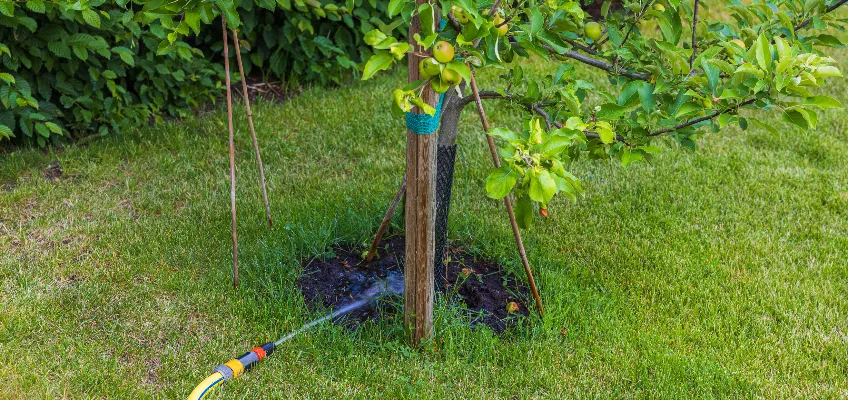
- Apply water slowly: Use a hand-held hose or properly adjusted irrigation system to allow moisture to penetrate without excessive runoff.
- Apply organic mulch: Add a 2–3-inch layer around the planting area to help retain moisture, leaving space around the trunk.
- Adjust for rainfall: Reduce watering after significant rainfall and monitor moisture during extended dry periods.
Avoid frequent shallow watering, which may not reach enough of the root zone. Excessive watering can also create soggy soil and reduce oxygen availability around developing roots. During Stage 3, homeowners can combine permitted irrigation days with hand watering whenever additional moisture is necessary.
Drip Irrigation vs. Tree Bubblers: Which Is Better for New Trees?
Both drip irrigation and tree bubblers provide targeted watering, making them useful for establishing new trees during drought restrictions. However, they distribute moisture differently, and choosing the right option depends on your tree’s needs and soil conditions.
Drip Irrigation for Slow, Consistent Watering
Drip irrigation in San Antonio uses emitters to release water gradually into the soil near developing roots. This method reduces overspray, limits unnecessary runoff, and allows homeowners to control water distribution more precisely.
Drip irrigation works particularly well when multiple emitters are positioned around the root zone. As the tree grows, emitter placement can be adjusted to accommodate expanding roots. Under drip irrigation Stage 3 restrictions, automated drip systems can operate on Monday and Friday during permitted watering hours.
Tree Bubblers for Dedicated Tree Watering
Tree bubblers release water into a concentrated area around the tree, making them suitable for dedicated irrigation zones. They can provide deeper watering when their flow rates and operating times are properly adjusted.
However, excessive water flow can cause pooling or runoff, particularly in compacted or poorly draining soil. Proper installation and regular adjustments help ensure moisture reaches the roots without unnecessary water waste.
Which option is better? Drip irrigation is often ideal for slow, distributed watering, while tree bubblers can be effective for individual trees with dedicated irrigation zones. Both can support healthy root establishment when properly maintained.
Prepare Your Irrigation System for Fall Planting in San Antonio
Keeping newly planted trees healthy during Stage 3 requires more than following an irrigation schedule. Proper controller settings, efficient water distribution, and timely repairs help ensure your trees receive the moisture they need without unnecessary water waste.
At A&W Irrigation Service, we help San Antonio homeowners improve irrigation efficiency through professional system inspections, repairs, and seasonal adjustments. Whether you’re preparing for fall planting or need help maintaining your existing system, our team can help you make the most of your watering schedule.
Contact us today to prepare your irrigation system for fall planting and support healthier trees throughout the season.