
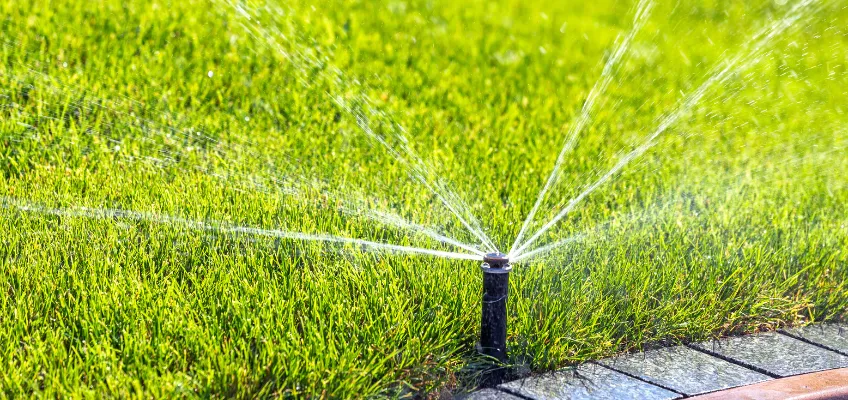
Under the SAWS Stage 3 watering rules, San Antonio homeowners can run automatic sprinklers once a week on their assigned watering day, between 5 a.m. and 10 a.m. or 9 p.m. and midnight. Your watering day depends on the last digit of your street address. Hand-watering is allowed daily, while drip irrigation follows a separate schedule.
With San Antonio watering restrictions returning to Stage 3 on September 22, 2026, knowing when to water is only part of the process. Your sprinkler controller also needs the right settings to avoid wasting water or running outside approved hours. Here’s how to adjust your irrigation schedule and keep your lawn healthy during restrictions.
What Are the Designated Watering Days in San Antonio?
The SAWS watering schedule assigns each home one watering day per week based on the last digit of its street address. Automatic sprinklers, irrigation systems, and soaker hoses must follow these assigned days. Check the schedule below before making changes to your controller.
| Last Digit of Address | Watering Day |
| 0 or 1 | Monday |
| 2 or 3 | Tuesday |
| 4 or 5 | Wednesday |
| 6 or 7 | Thursday |
| 8 or 9 | Friday |
Allowed watering hours:
- Morning: 5 a.m. to 10 a.m.
- Evening: 9 p.m. to midnight.
- Weekends: No regular automatic sprinkler watering.
For example, if your address ends in 6, your assigned watering day is Thursday. You can schedule your sprinklers during either approved time window, but the entire watering cycle must finish before the window closes.
Because drought conditions can change, check the official SAWS watering restrictions before adjusting your schedule.
How to Program Your Sprinkler Controller for Stage 3
Following watering restrictions becomes much easier when your irrigation controller does the work for you. The right settings help distribute water efficiently while keeping your sprinklers within the permitted schedule. These five steps explain how to program a sprinkler for Stage 3 without making the process complicated.
1. Select Your Assigned Watering Day
Open your sprinkler controller’s scheduling menu and find the program responsible for your lawn irrigation. Set it to your designated weekday based on your street address. Turn off any additional watering days and check other active programs to prevent unintended watering.
2. Set Your Sprinkler Start Time
Choose a start time that gives every irrigation zone enough time to finish within the approved watering window. Early morning is often a good option because cooler temperatures can help reduce evaporation.
For example, you could start at 6 a.m. and allow your irrigation zones to run sequentially. Just make sure the complete program finishes before 10 a.m.
3. Adjust Each Zone’s Run Time
Every irrigation zone has different watering needs depending on the sprinkler heads, soil conditions, and sun exposure. Giving every zone the same run time can lead to dry patches in one area and excess moisture in another. Consider these factors when setting your watering durations:
- Sprinkler Type: Spray heads and rotary sprinklers apply water at different rates.
- Sun Exposure: Areas receiving direct sunlight may dry faster.
- Soil Type: Clay-heavy soil often absorbs water more slowly.
- Water Pressure: Low pressure can affect coverage and water distribution.
- Lawn Conditions: Established turf may need less water than newly planted areas.
The goal is to apply enough water to reach the roots without creating puddles or runoff. If you’re unsure how long each zone should run, a sprinkler system inspection can help determine more appropriate settings.
4. Use Cycle-and-Soak for Better Water Absorption
Sometimes, water starts running onto sidewalks before the soil has enough time to absorb it. Cycle-and-soak helps prevent this by dividing one long watering session into shorter cycles. For example, instead of running a zone continuously for 12 minutes, you can use:
- First Cycle: Water for 6 minutes.
- Soaking Period: Pause to let the water absorb.
- Second Cycle: Water for another 6 minutes.
This approach is especially useful for sloped lawns and areas with compacted soil. Just make sure every cycle, including the soaking periods, fits within your approved watering window.
5. Adjust Your Seasonal Watering Percentage
Many sprinkler controllers have a seasonal-adjust feature that lets you increase or decrease watering times without changing every zone individually. This is helpful when temperatures drop and your lawn doesn’t need as much moisture.
For example, setting the seasonal adjustment to 60% reduces a 20-minute watering cycle to 12 minutes. The best percentage depends on rainfall, temperatures, soil conditions, and your lawn’s actual needs.
SAWS has recommended reducing seasonal settings to approximately 70% in October and 40% in November, with automatic irrigation turned off in December when conditions allow. These are general seasonal conservation recommendations rather than mandatory Stage 3 settings.
Remember to Check Your Controller After Daylight Saving Time
Daylight saving time ends on November 1, 2026. After the clock change, confirm that your controller displays the correct time and weekday, since some models don’t update automatically. It’s also a good opportunity to review your San Antonio sprinkler schedule, seasonal settings, and programmed start times.
What Other Watering Methods Are Allowed During Stage 3?
Not every watering method follows the same restrictions as automatic sprinklers. SAWS allows certain methods to operate more frequently, while newly installed landscapes may qualify for special allowances. Understanding these differences can help you care for your property without violating local watering rules.
| Watering Method | Stage 3 Allowance |
| Hand-held hose | Allowed any day, at any time |
| Drip irrigation | Monday and Friday, 5–10 a.m. or 9 p.m.–midnight |
| Tree bubbler zones | Monday and Friday, during the same permitted hours |
| New landscape variance | Additional watering may be approved for qualifying new-construction landscapes |
What about newly installed sod or plants?
New turf doesn’t automatically qualify for additional watering. SAWS landscape variances are available for qualifying new-construction projects that meet specific requirements and receive approval. Homeowners replacing existing grass or adding new plants should follow the applicable restrictions unless SAWS grants an exception.
Can Stage 3 Watering Increase Your Water Bill?
SAWS Stage 3 includes a high-use surcharge for households that exceed certain monthly water consumption limits. Under the current rate schedule, single-family customers pay an additional $10.37 per 1,000 gallons used above 20,000 gallons per month. This means a household using 23,000 gallons could face an additional $31.11 in drought-related charges.
Your Local Experts for Sprinkler Maintenance and Repair in San Antonio
At A&W Irrigation Service, we help San Antonio homeowners maintain reliable irrigation systems through seasonal changes and watering restrictions. We understand how frustrating it can be when your lawn develops dry patches, sprinkler heads leak, or your controller doesn’t work as expected. Our team focuses on identifying problems, improving system performance, and helping you use water more efficiently.
Our residential sprinkler system maintenance includes system inspections, sprinkler head calibration, water pressure checks, controller optimization, and seasonal adjustments. We also provide sprinkler system repair to address damaged pipes, leaking heads, clogged nozzles, malfunctioning controllers, and zone failures. Whether you need routine maintenance or targeted repairs, we’re here to help keep your irrigation system working properly.
Get Your Sprinkler System Ready for SAWS Stage 3 Restrictions
Following the SAWS Stage 3 watering rules doesn’t have to make lawn care complicated when your irrigation system is properly maintained. From setting the right watering schedule to improving sprinkler performance, small adjustments can help reduce water waste and protect your lawn.
Our team provides residential sprinkler maintenance and repair services to help you make the most of your permitted watering hours. Contact us today to schedule your service in San Antonio, TX, and keep your irrigation system ready for changing watering restrictions.


